Candle Science from The Studio- Observations on Soy Wax Curing and Challenges

Introduction
Soy wax is often described as forgiving and beginner-friendly, yet many candle makers encounter persistent surface cracking despite consistent materials and technique. This paper presents studio-based observations on soy wax cracking, drawn from controlled pours conducted under identical conditions, with environmental variables as the primary point of difference. The findings suggest that ambient airflow, weather conditions, and cooling rate play a more critical role in surface integrity than is commonly acknowledged.
Materials and Constants
Wax Material : Soft Soy Wax (Container Wax)
Candle Compatible Fragrance/Perfume Oil
Dye/Candle Colour : None
Jar Material : Cast Art Concrete sealed with Concrete Sealant.
Other Constants: Pour Temperature 75 - 80° C
Preheated jars: ~30-40°C
Wooden wicks of identical size and type were used for each candle, positioned centrally in each jar. Fragrance oils were measured consistently across batches, ensuring that scent ratios did not vary. No other additives or modifiers were introduced during the pours. These controlled constants ensure that the observed differences in candle cracking can be attributed primarily to environmental factors rather than variations in materials or method.”
Environmental conditions during Pouring
While materials and technique were held constant, the environmental conditions during pouring varied significantly between batches.
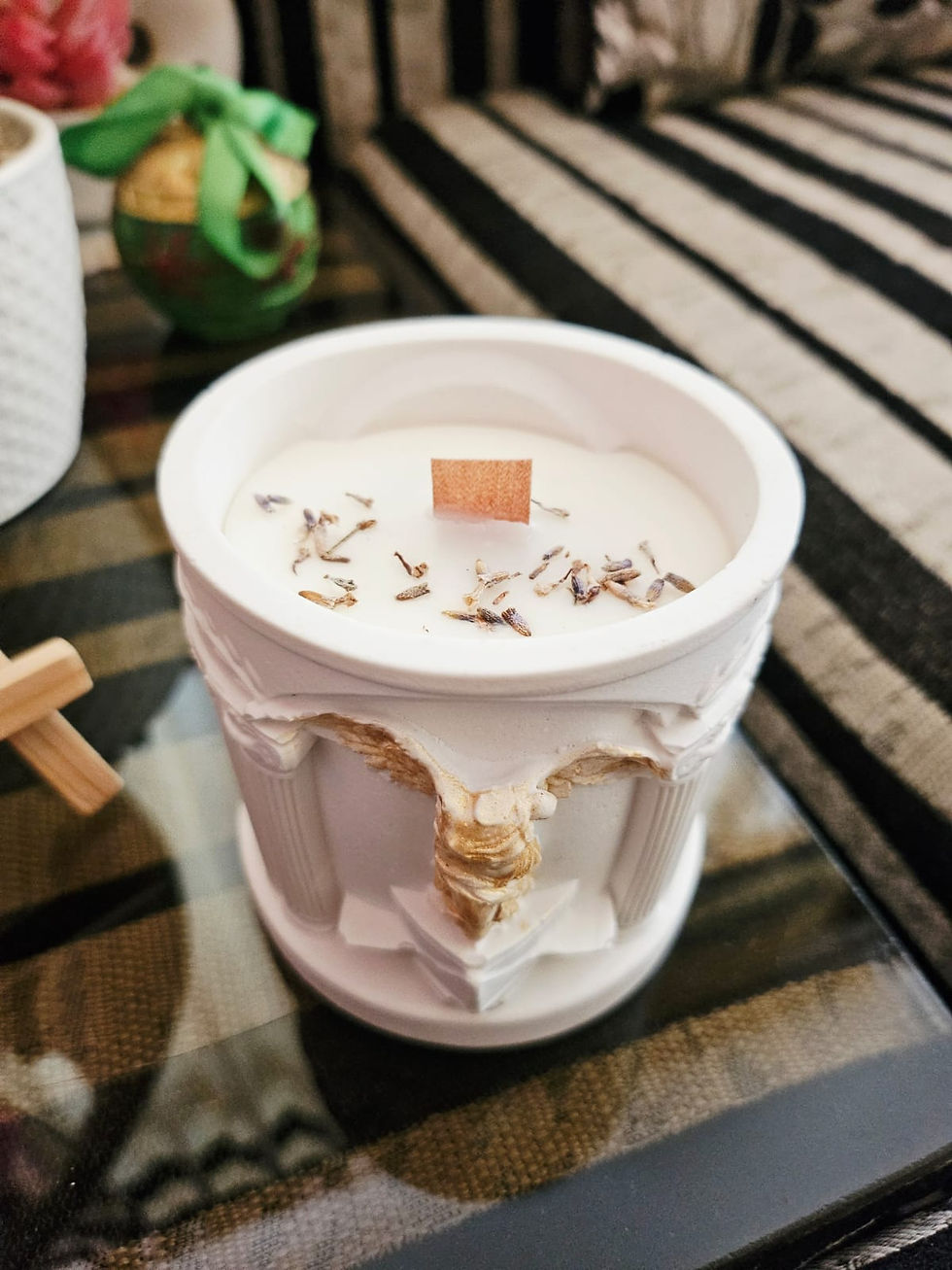
Candle #1 was poured on a calm, stable day with minimal air movement in the workshop , resulting in an even, smooth surface with no cracks.
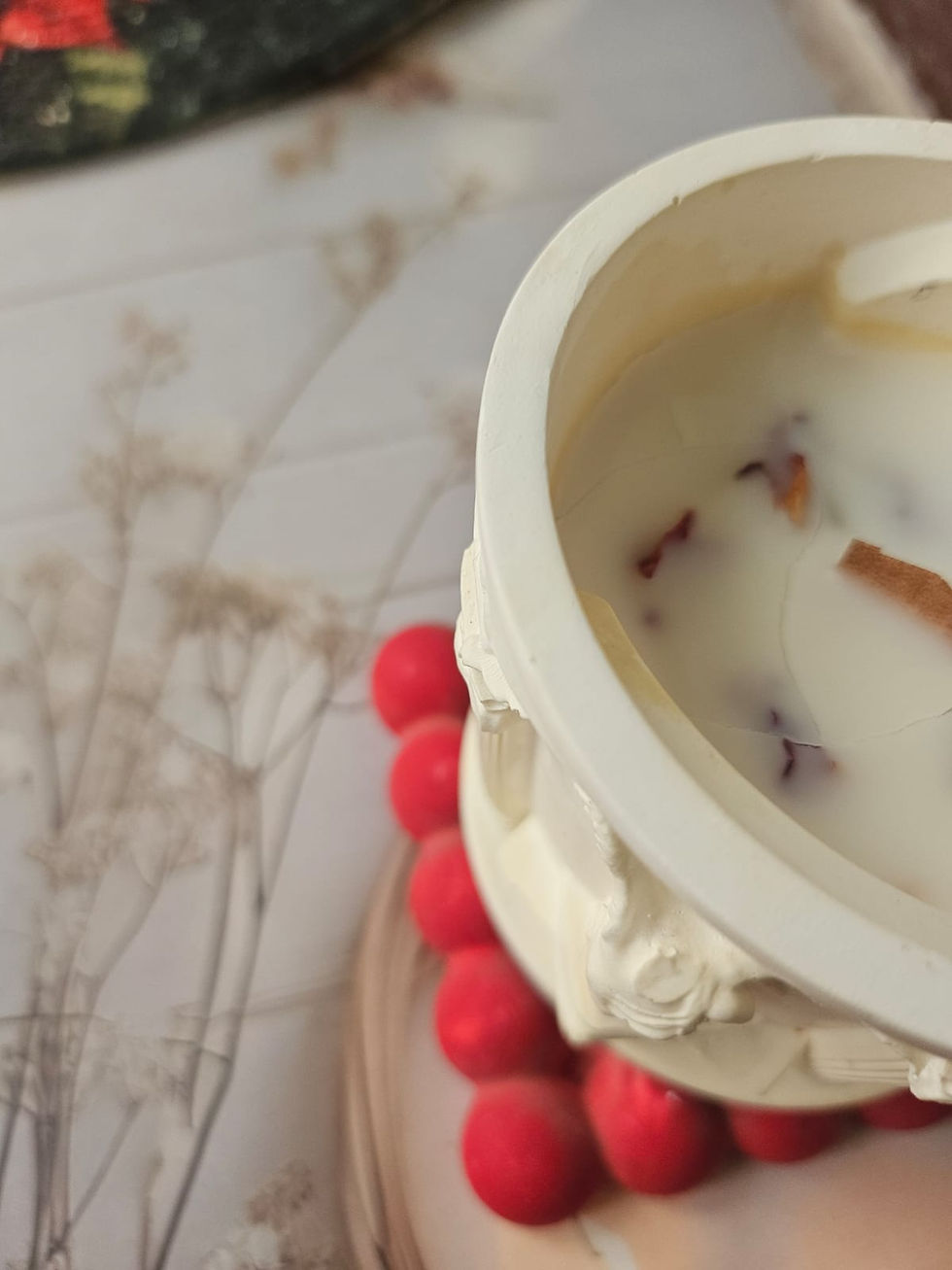
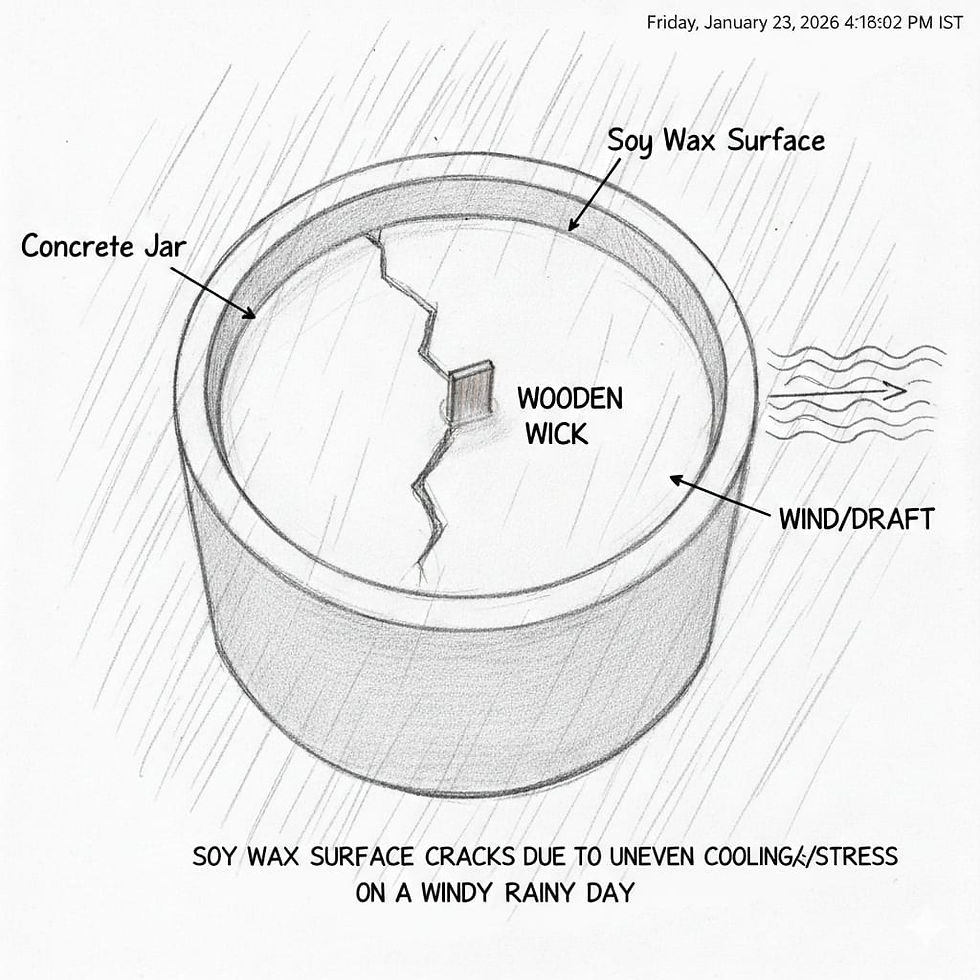
In contrast, candle #2 was poured on a rainy and windy day; although indoors, subtle drafts and fluctuations in ambient temperature within the studio contributed to uneven cooling of the wax.
These conditions correlated strongly with the formation of surface cracks and minor deformation of the wooden wick during a second pour. Hence , we can deduce that even slight changes in airflow and room temperature can have a pronounced effect on soy wax behavior, highlighting the importance of controlled environmental conditions for consistent candle quality.
Observations:
Candle #1: calm day, no wind → no cracks, smooth top
Candle #2: windy, rainy day → cracks appeared despite using the same wax, jars, wick, and pour temperature
Candle #2: A second pour to fix the wax crack caused the wooden wick to shorten slightly, though it wasn't completely submerged in wax; the candle is still usable.
For both test candles:
Pour temperature for soft soy: ~75–80°C
Preheated jars: ~30°C
For Candle #2, using a heat gun smoothed the surface temporarily, but cracks reappeared
Drafts and ambient air movement were strongly linked to the occurrence of cracks
The candle scent remains consistent across batches, even when cracking occurs
These observations suggest that ambient airflow and cooling rate have a significant impact on surface integrity, even more than pour temperature or preheating alone. Notably, fragrance consistency remained unaffected across batches
Discussion
The above observations indicate that environmental conditions, particularly airflow and ambient temperature fluctuations, play a critical role in the formation of cracks in soft soy wax candles. Even with controlled variables such as pour temperature, jar preheating, and wick type, the presence of wind or drafts resulted in uneven cooling and internal stress, leading to surface cracks. This highlights that successful candle making is not determined solely by materials or technique, but also by the conditions under which the wax cools. Slower, more uniform cooling appears to minimize shrinkage-induced cracking, suggesting that careful management of the studio environment is as crucial as pour parameters.
Practical Implications for Candle Makers/Chandlers
The test and experiments highlight several practical considerations for makers of soy wax candles.
First, environmental control is critical: even minor drafts or temperature fluctuations in a workshop can cause cracking, so choosing a calm, stable space and minimizing airflow during pouring and cooling is essential.
Second, pour temperature and jar preheating, while important, cannot fully compensate for environmental stressors; slightly cooler pours (68–72°C for soft soy) and slow, undisturbed cooling can reduce shrinkage-induced cracks.
Third, wooden wicks require careful monitoring during repours, as they can shrink or sink if the wax is remelted.
Finally, makers should recognize when conditions are suboptimal and postpone pouring, rather than attempting to fix crx cracks with heat guns or additional pours, as this can compound wick and surface issues. By integrating these practices, candle makers can improve consistency and overall quality in their soy wax products.
Conclusion
This study of soy wax candle pouring demonstrates that even when materials, techniques, and fragrance ratios are held constant, environmental factors such as airflow, ambient temperature, and cooling rate play a decisive role in surface integrity.
Calm, stable conditions lead to smooth, crack-free candles, while drafts and temperature fluctuations increase the likelihood of cracking and wick deformation. By understanding and controlling these environmental variables, makers can improve the consistency and quality of their candles.
These findings highlight the importance of observational studio science and suggest that mindful attention to both technique and environment is essential for successful candle production


Comments